
An introduction to Machine Learning for health and epidemiology#
Understand concepts important to Machine Learning in Health with notebooks that run on real health data, giving the practical elements to tackle the complexity of real statistical learning questions in health.
Machine-learning: flexible models for health data#
Machine-learning tools provide flexible models that can relate a health outcome (called “target” or “y” in machine learning) to covariates (called “features” or “X” in machine learning).
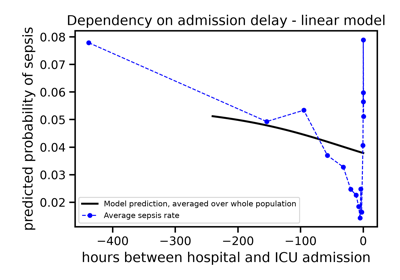
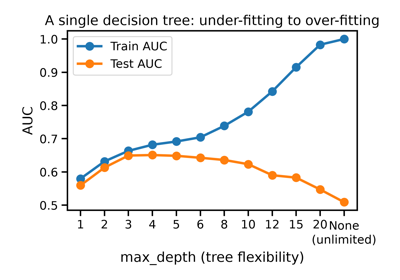
These first notebooks introduce the two health datasets used throughout the course, and the core machine-learning ideas: fitting a model, checking it on held-out data, comparing a linear and a non-linear model, and the trade-off between under-fitting and over-fitting.
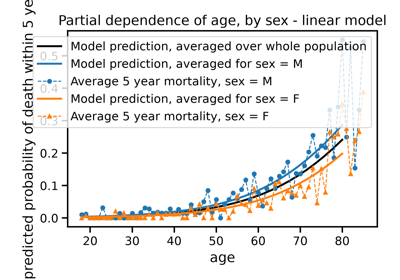
An epidemiological study: Predicting 5-year mortality
Biases that can break a model’s utility#
Multiple biases that can arise in the data and prevent the success of models, flexible or not. These next notebooks discuss these biases, that can silently distort an analysis.
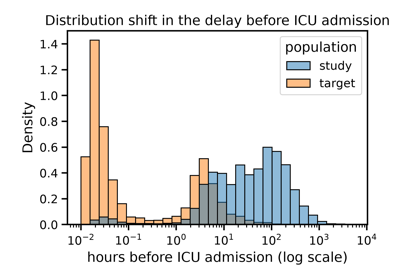
Covariate shift: when the deployment population differs
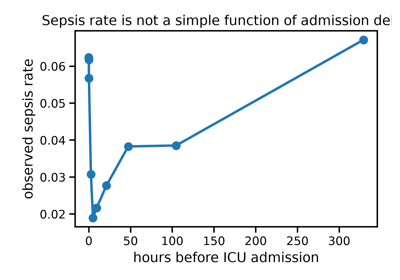
Indication bias: challenge in reasonning on interventions
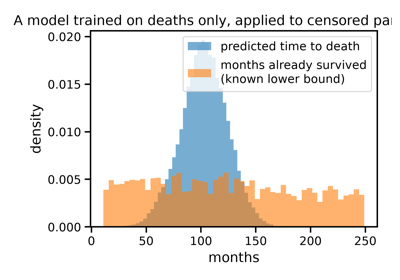
Survival and time-to-event: accounting for censoring